
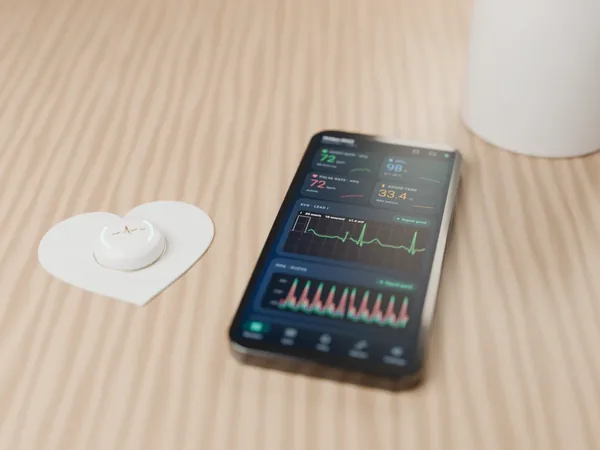
Home monitoring
Follow patients after discharge, with recordings a doctor can review later.
Hridya records ECG, pulse, SpO₂ and motion, and streams them to its own Android app. The prototype runs on the bench today. Develop it with us into a medical wearable under your own brand.
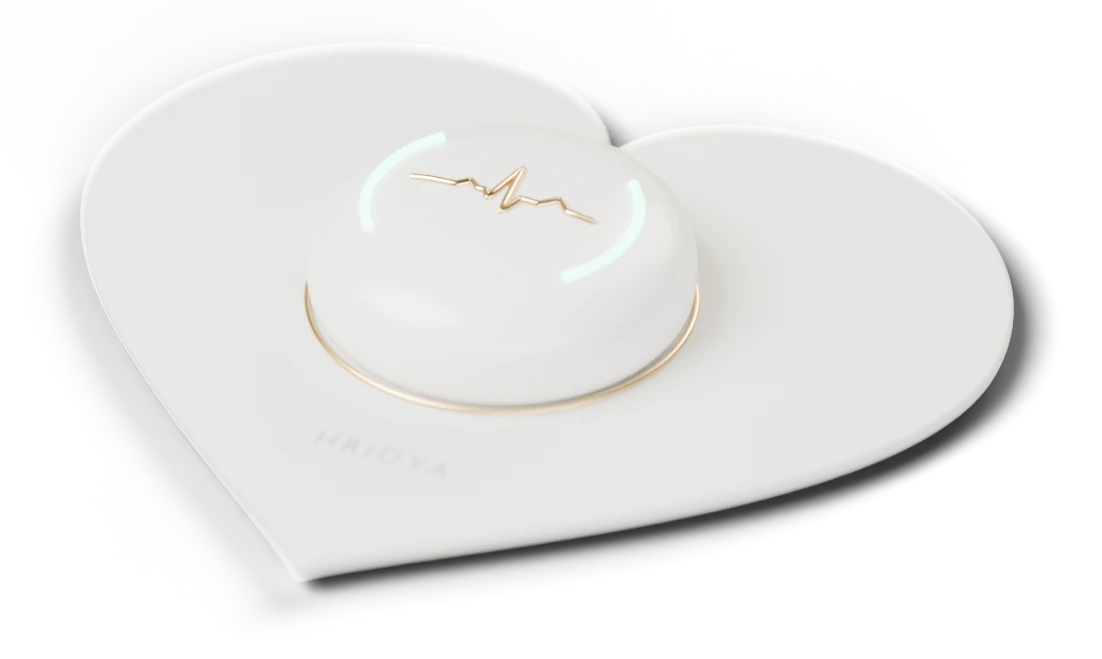
For product teams
Getting a clean signal from the skin to the phone is the slowest part of building a new wearable. Hridya is past that step. Develop it with us and start from working hardware, firmware and an app.
Your users, markets, brand and sensors, turned into a written plan with costs, risks and a timeline.
A custom wearable board, enclosure, electrodes and adhesive, longer battery life, your branding and an iPhone app if you need one.
Bench tests against a reference ECG recorder, then small batches for a study with your clinical partner.
Design records toward IEC 60601-1, IEC 62304 and ISO 14971, ready for your regulatory partner and manufacturer.
Sensors, firmware, Bluetooth link, app and ECG reports already built and working together.
Enclosure, app and reports under your name. Commercial terms agreed in writing.
A mutual NDA before you share your plans. The engineers who built Hridya develop your version.
Who it is for: remote patient monitoring companies, medical device makers, hospitals and cardiac care providers, and research groups. Related: ECG patch under your brand · remote patient monitoring devices · ECG patch development in India · what drives the cost
The design
Hridya means “of the heart”. We built it as a complete working system: sensors, firmware, signal processing and app.
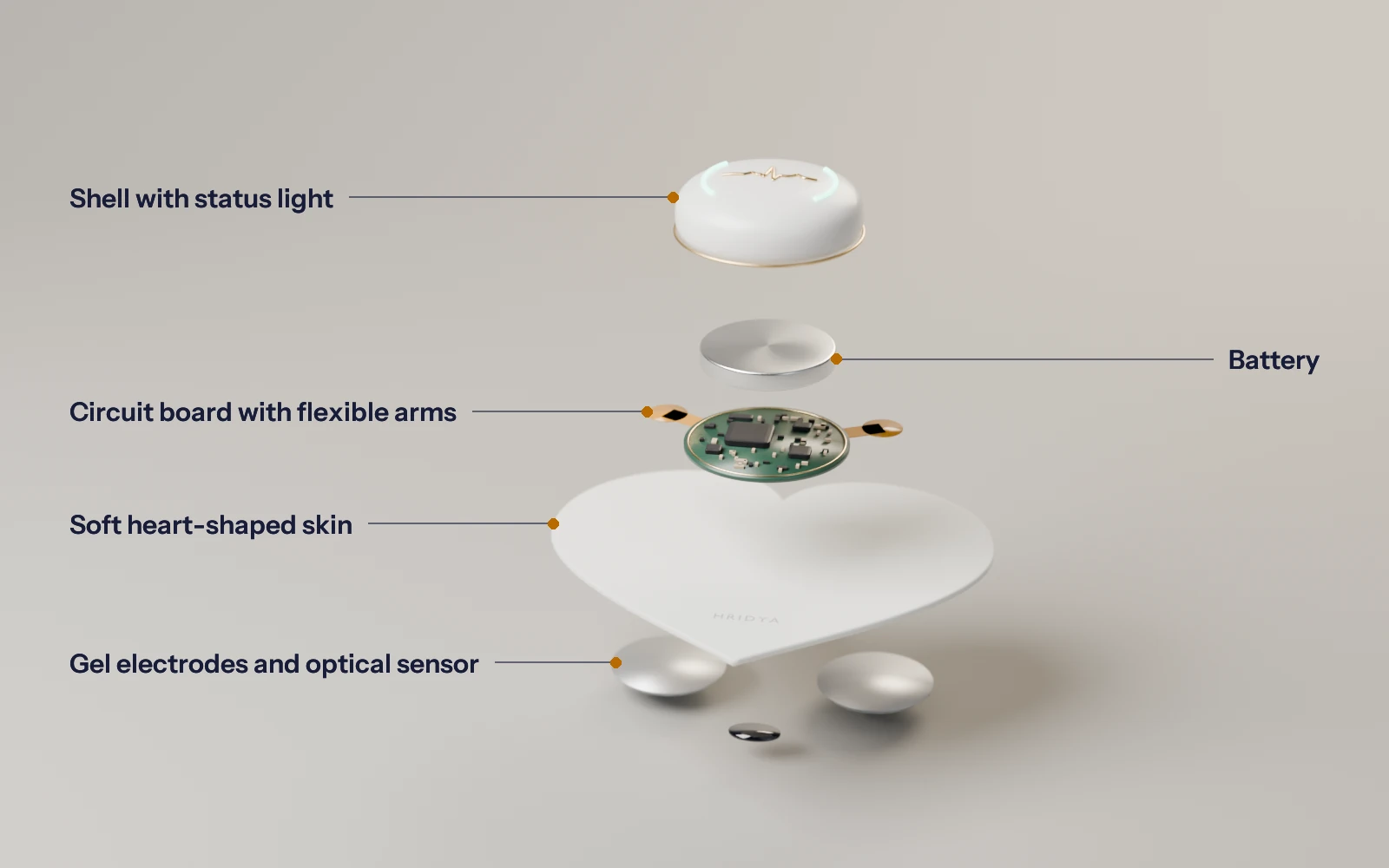
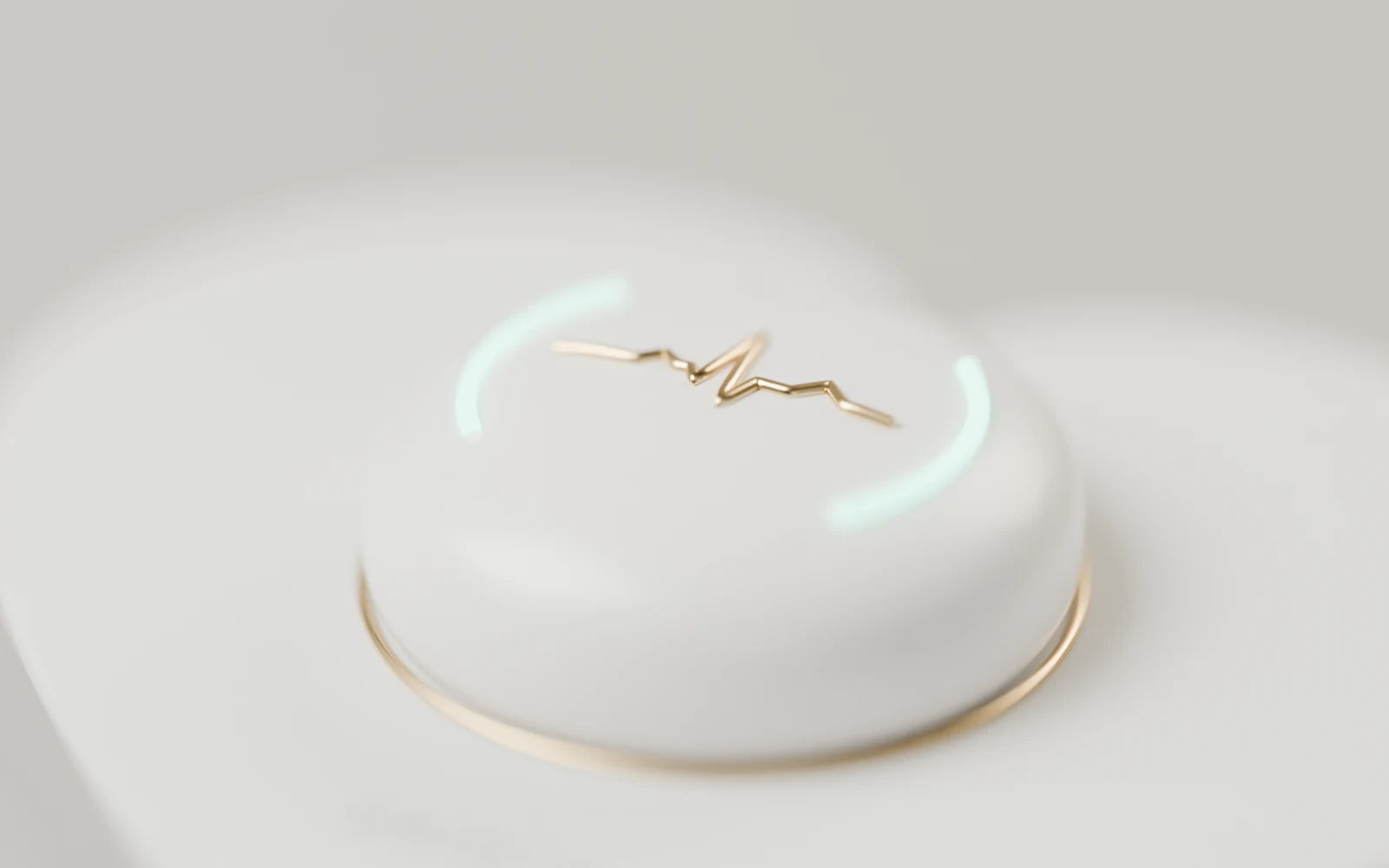
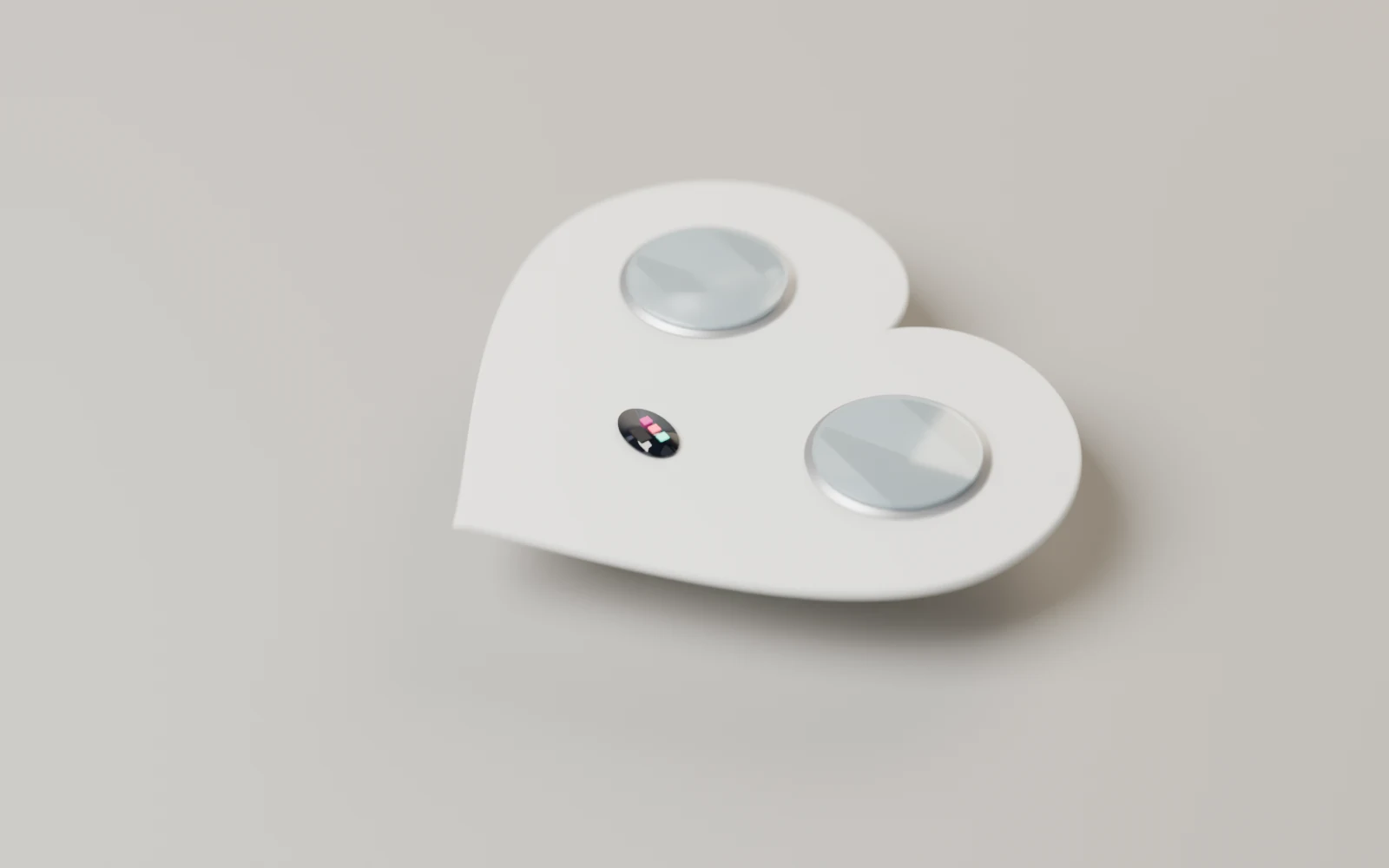
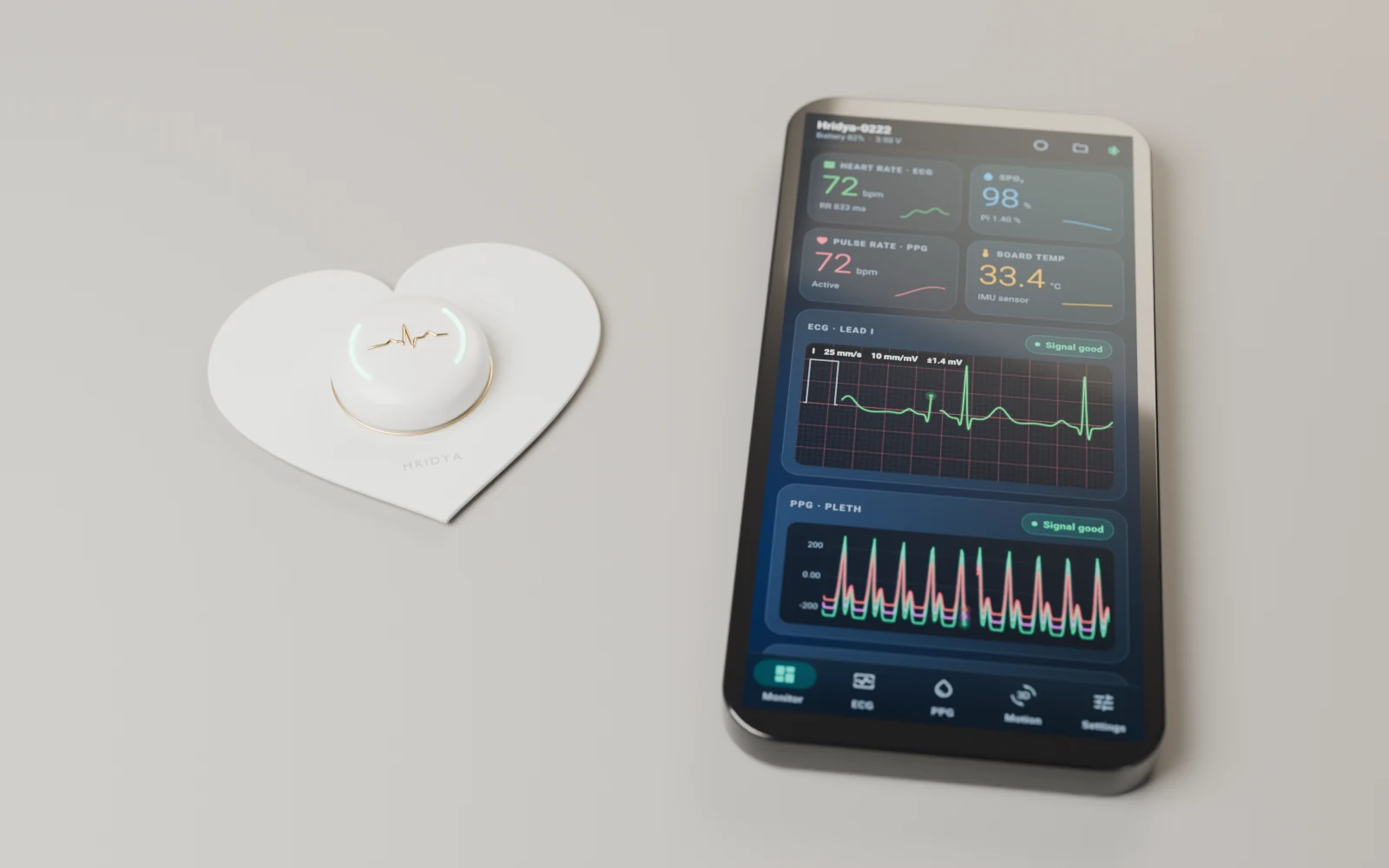
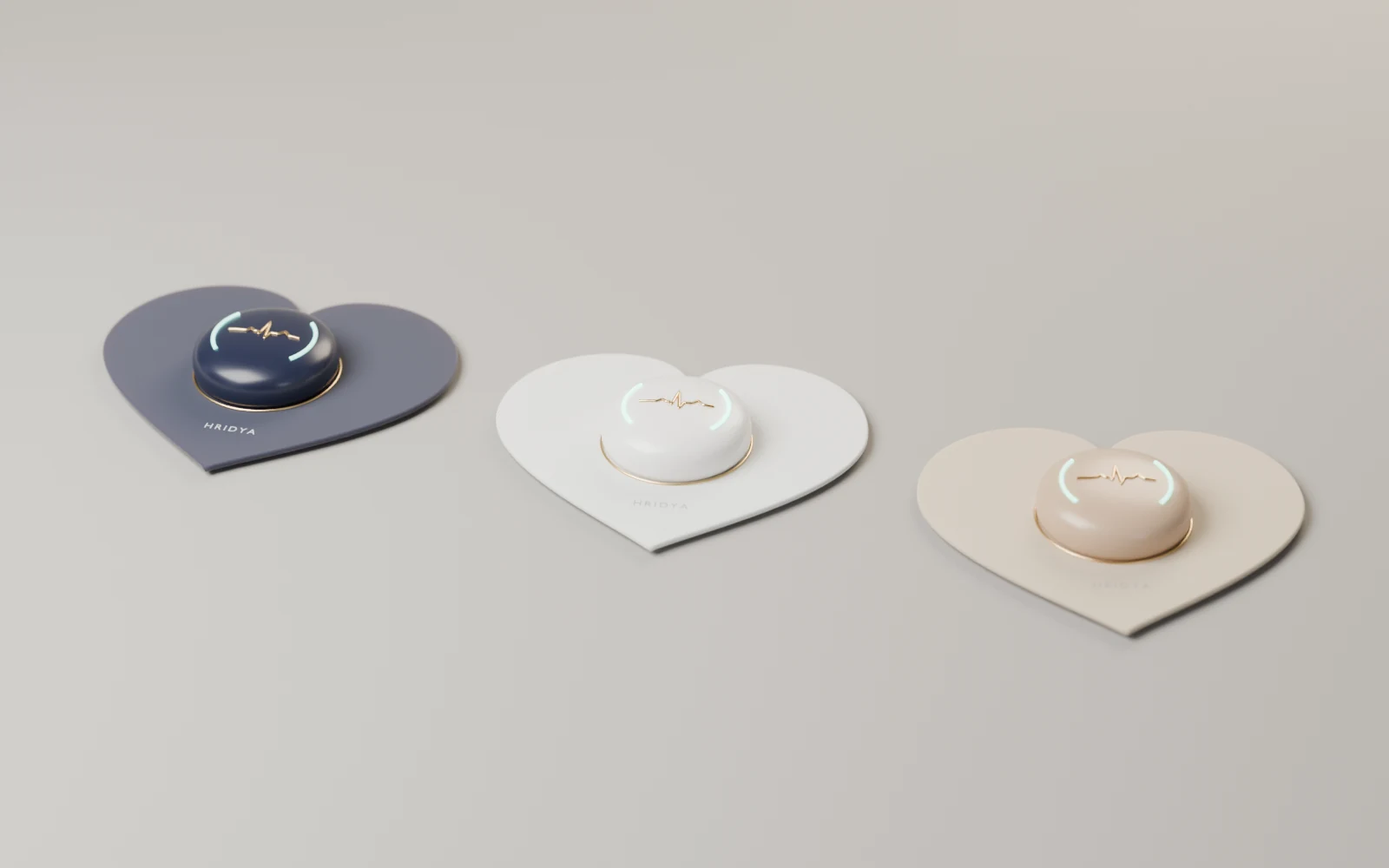
Enclosure concept shown as photoreal renders, built around our working V0.2 prototype.
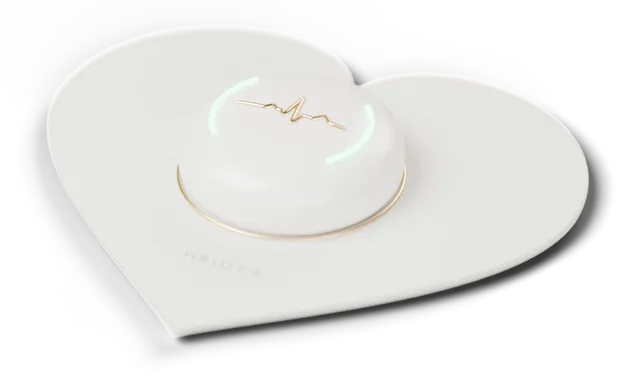
The same model we use for the renders, at true size. Drag to rotate and pinch to zoom. On a supported Android phone you can place it in your room with the camera.
About 0.7 MB, loaded only when you press the button.
Status
The first question every partner asks is what actually works. Here is the honest status, and what we develop next together.
Markets
The same core can become a product for remote patient monitoring, cardiac care or research.
Follow patients after discharge, with recordings a doctor can review later.
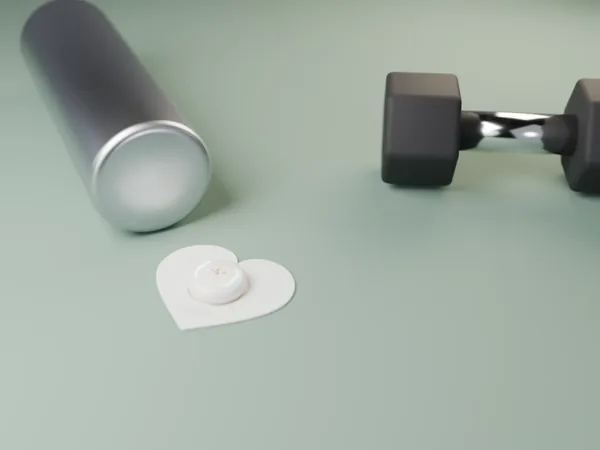
Heart rate and rhythm during walks and exercise, with motion data to explain any noise.
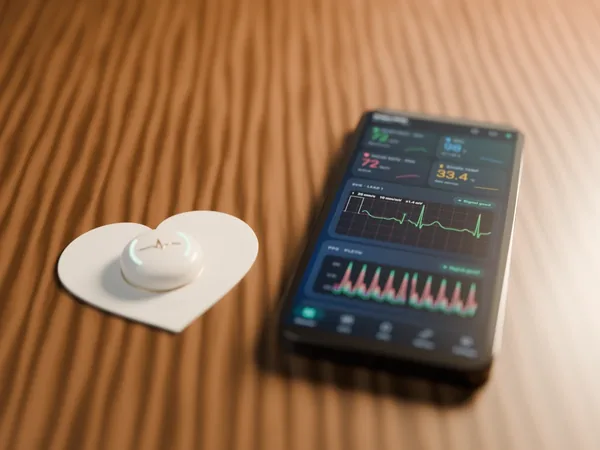
Comfortable, wire-free wear through the night, with posture and SpO₂.
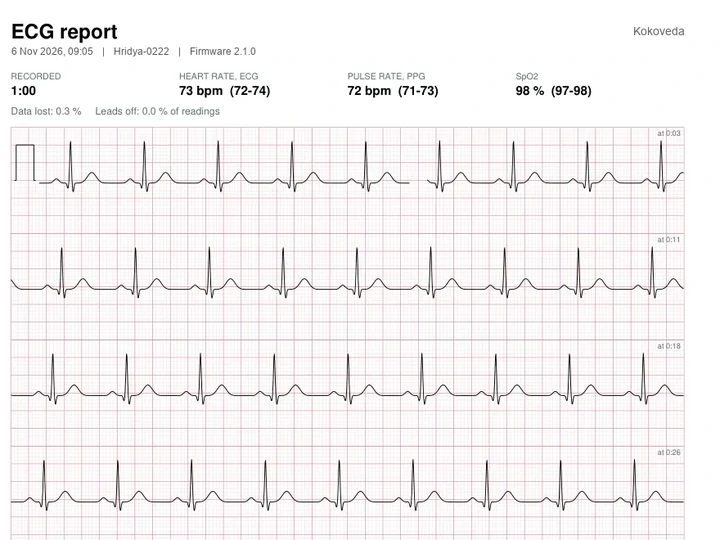
Raw signals and spreadsheets for study teams, with signal quality marked on every sample.
Scenes are photoreal renders of the Hridya enclosure concept. Hridya is a research device and is not yet certified for clinical use.
Live demo
Pick an activity to see how heart rate, SpO₂ and movement change, and how signal quality is tracked while the wearer moves.
Sitting still. A clean single-lead ECG and a steady optical pulse.
Why readings change on the move: SpO₂ and motion artifacts. Illustrative demo signals generated in your browser, not recordings. Each small square is 40 ms by 0.1 mV.
The companion app
Live signals, recordings and reports on Android. Screens shown with demo readings.
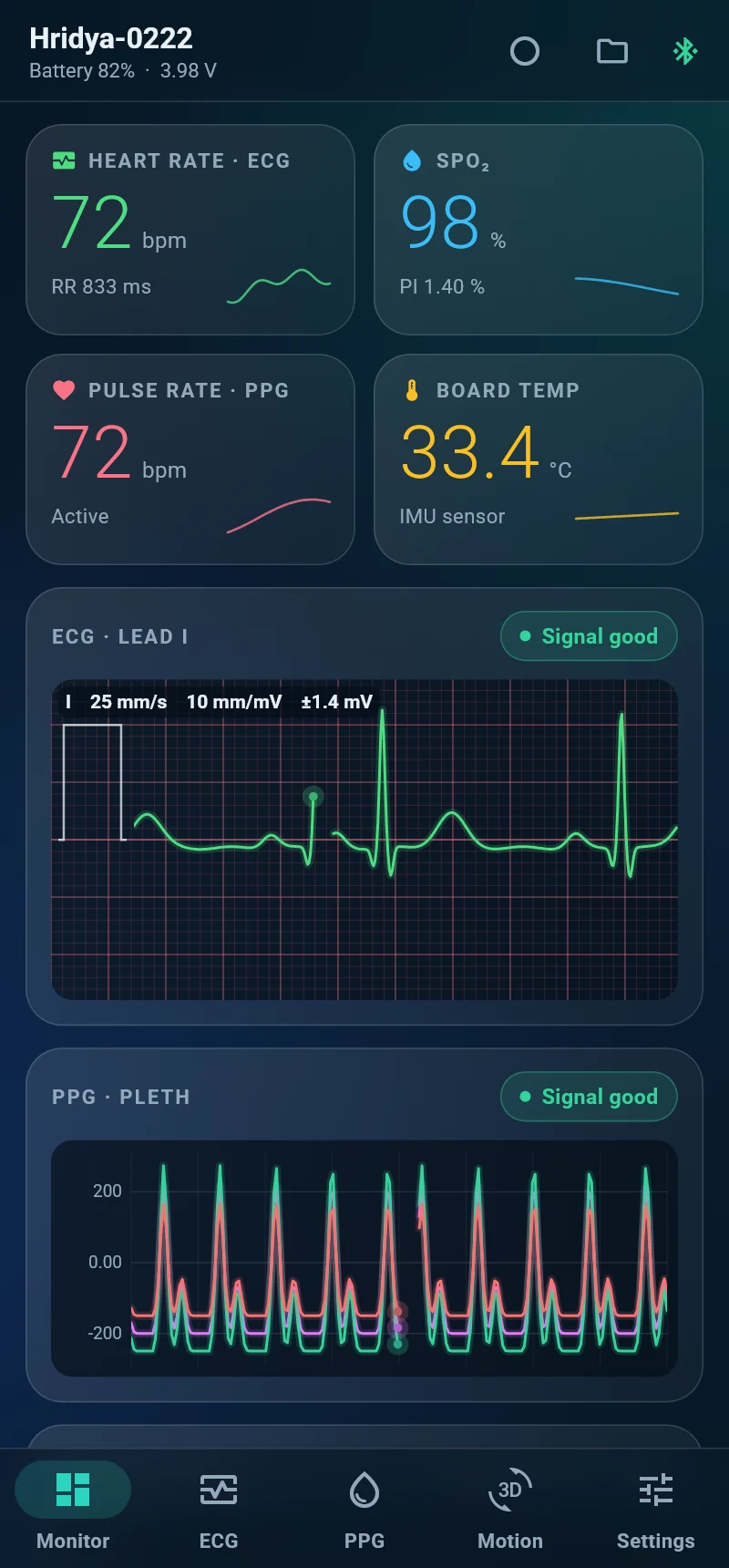
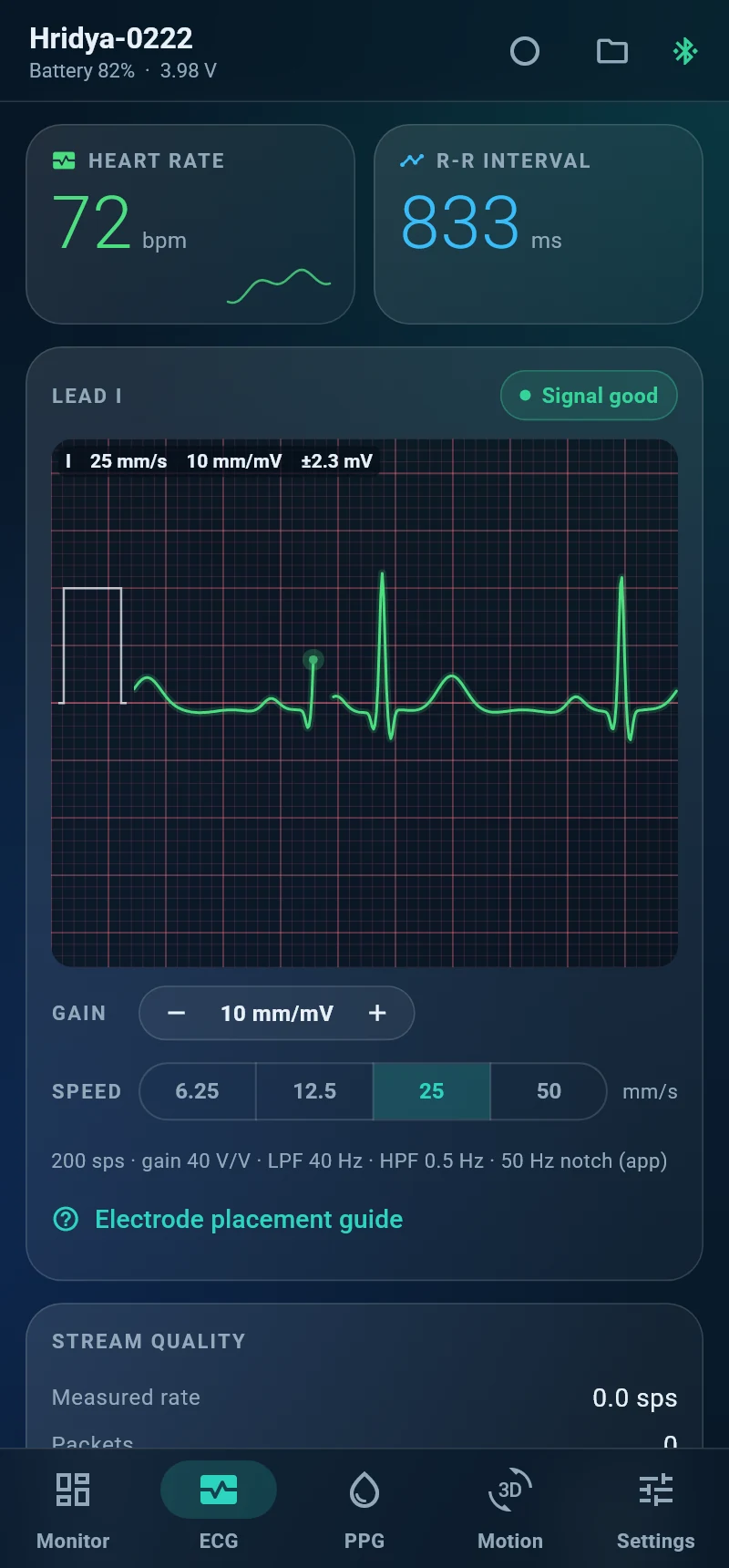
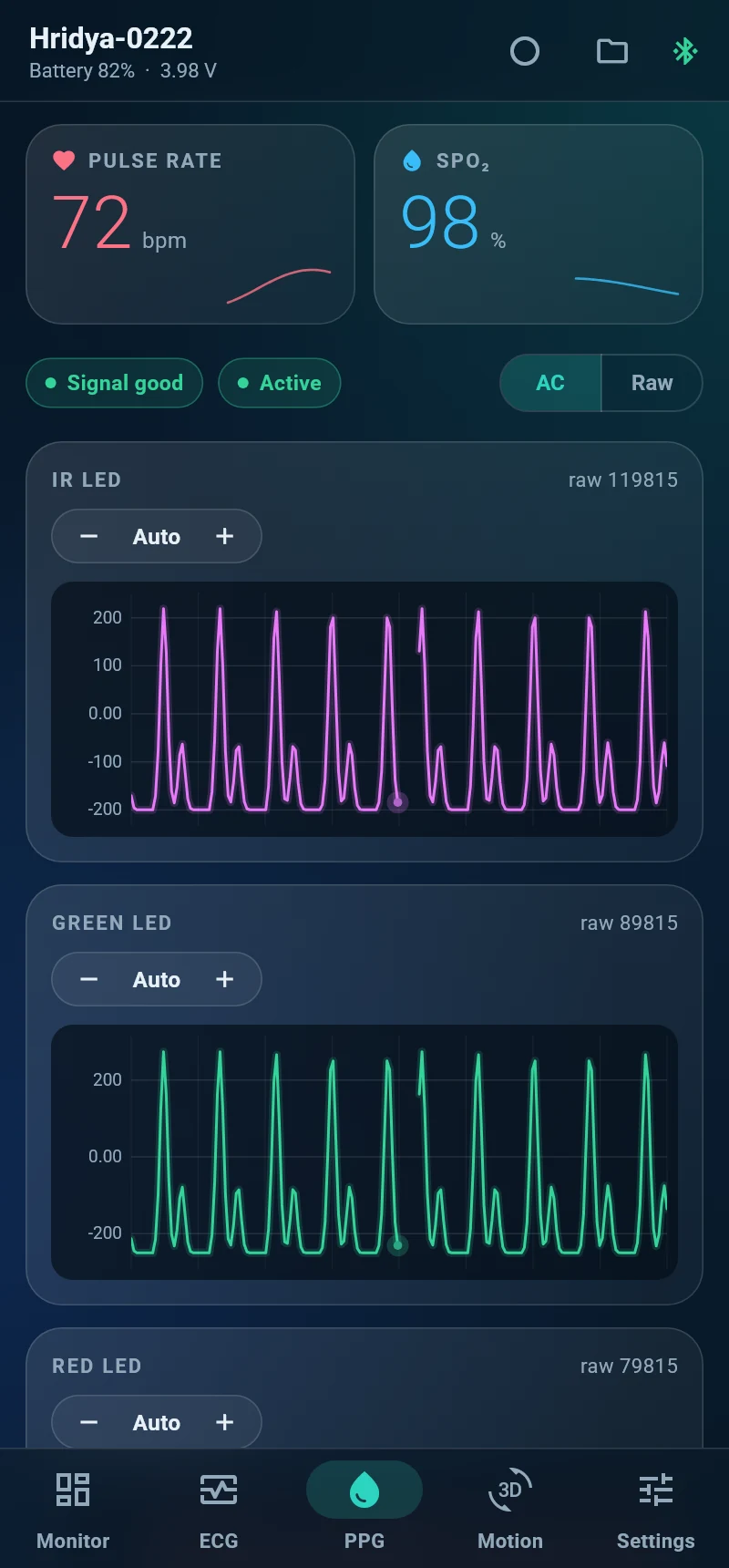
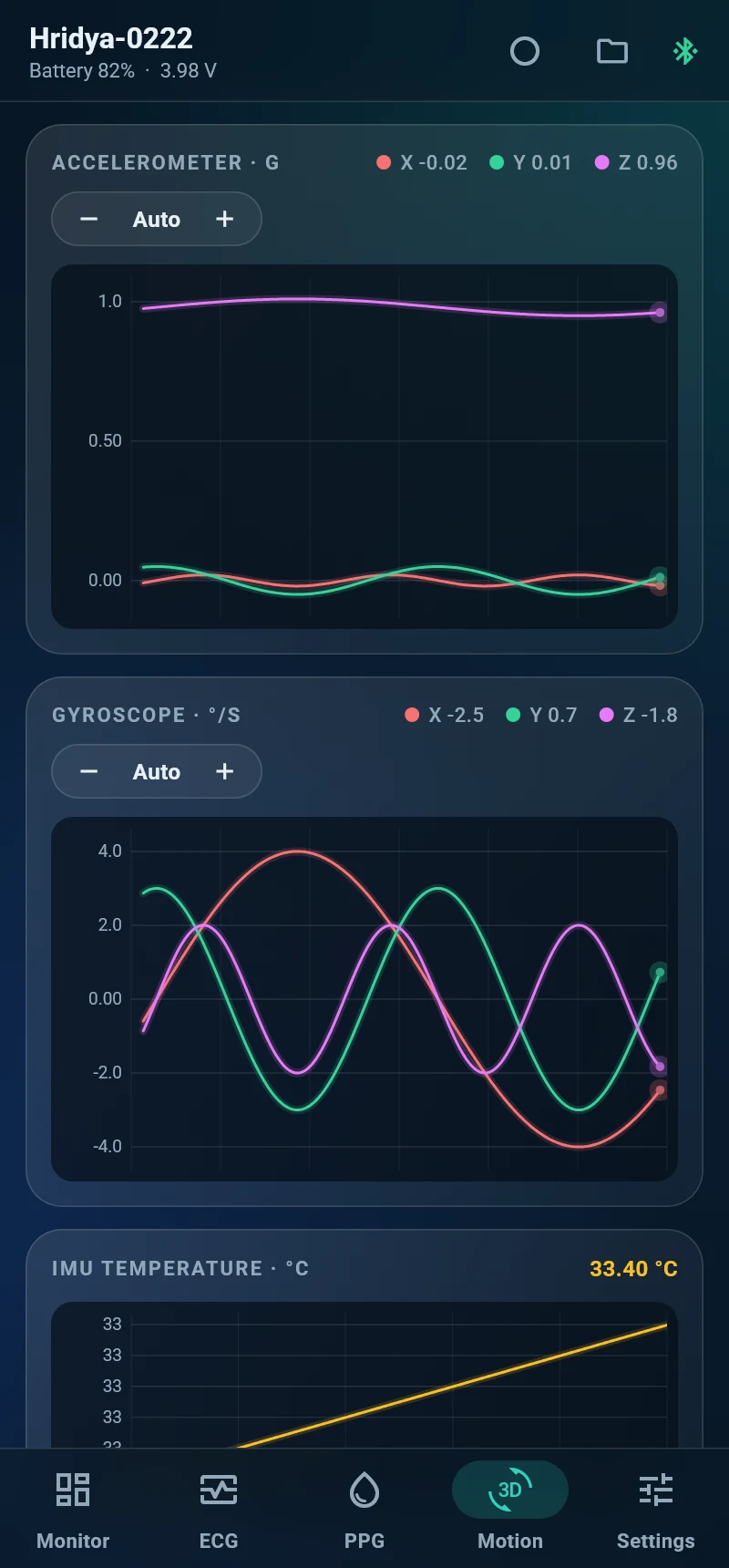
25 mm/s and 10 mm/mV with a 1 mV calibration pulse, the conventions doctors read every day.
Each trace is marked good, fair or poor, with the reason: leads off, movement, noise or no skin contact.
Sessions save to the phone as spreadsheets. Any stretch becomes a one-page A4 ECG report.
Step-by-step placement with a live check that says when the signal is ready to record.
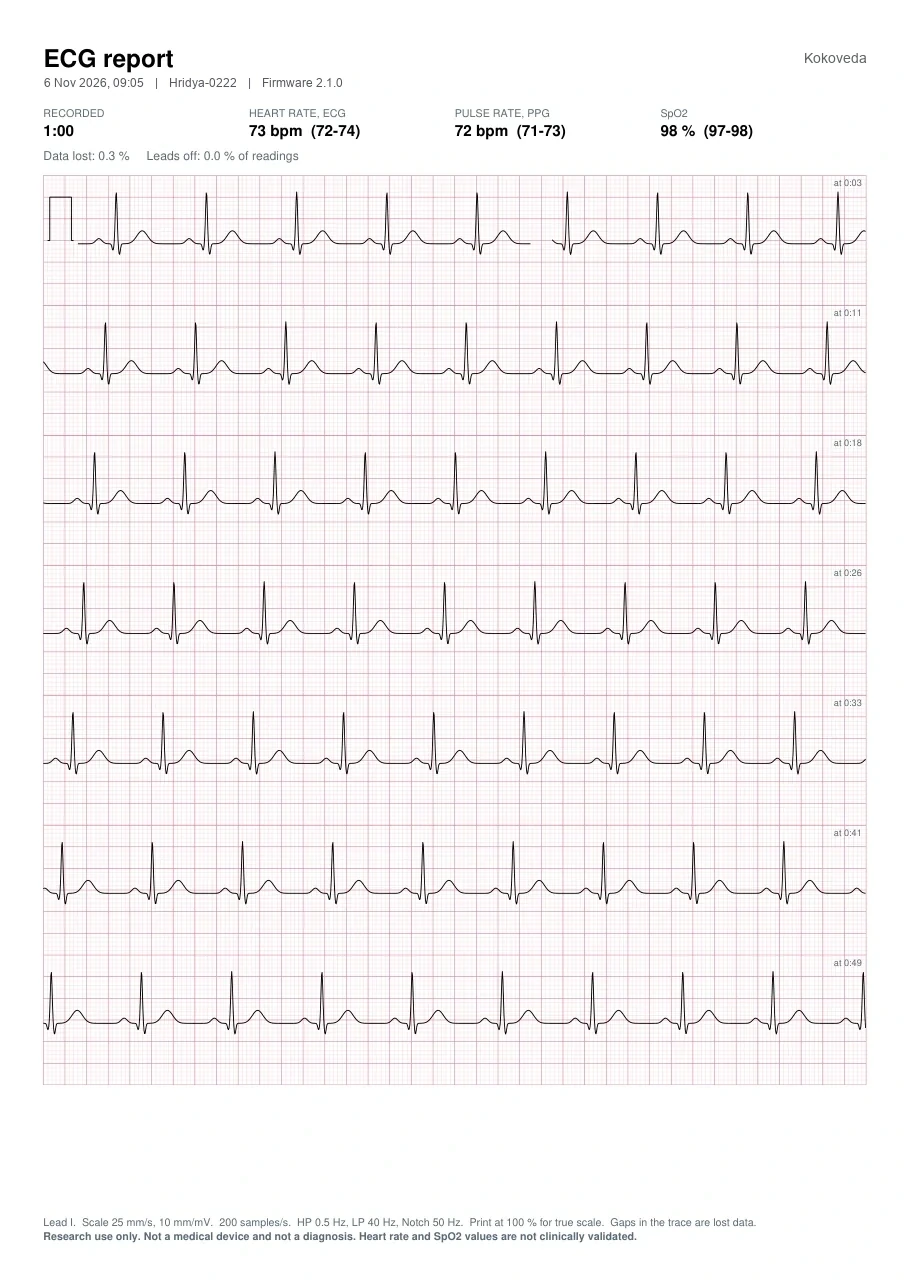
Seven rows of Lead I on a 1 mm grid, with heart rate, pulse and SpO₂ ranges and the lost-data figure. Gaps stay visible instead of being joined up.
Generated from demo data. Hridya is a research device and not certified for diagnosis.
Specifications
The heart sits on the chest with an electrode under each lobe and the optical sensor under the pod. Nothing to clip on and no wires.
Yes. That is what Hridya is for. We develop it with you into a device under your brand, starting from its working firmware, signal processing, Bluetooth protocol, app and report engine. Commercial terms are agreed in writing for each partner.
The electronics, firmware and Android app work on the bench. Still to come: the wearable enclosure, longer battery life, bench testing against a reference recorder, a pilot study and certification such as CDSCO, CE or FDA with your regulatory partner. Hridya is a research device and is not certified today.
It depends on your requirements and markets. The first step is a product brief of typically 2 to 4 weeks, which ends with a written plan, timeline and cost. Starting from a working prototype removes the slowest early steps of a new wearable.
Yes. The core can drop or add sensors, change the body site or move to a different enclosure. We tell you during the product brief which changes are cheap and which reset parts of the work.
Single-lead ECG at 200 samples per second, optical pulse and SpO₂ with green, red and infrared light, and motion from a 6-axis accelerometer and gyroscope.
Yes. We are happy to sign a mutual NDA before you share details of your product, market or clinical plans.
Work we do specifically for you, such as your enclosure, branding and custom features, is handed over to you with source files. How the Hridya core is used in your product is set out in the partner agreement. Both are agreed in writing before work starts.
Tell us your market, your users and your timeline. We reply with questions and a first plan, and sign a mutual NDA before details are shared.